As an Amazon Associate I earn from qualifying purchases.
Blanch the ribs, sear them golden, add carrots, potatoes, and mushrooms, then let the rice cooker finish the job with rice, corn, and peas — meat, vegetables, and rice in one pot
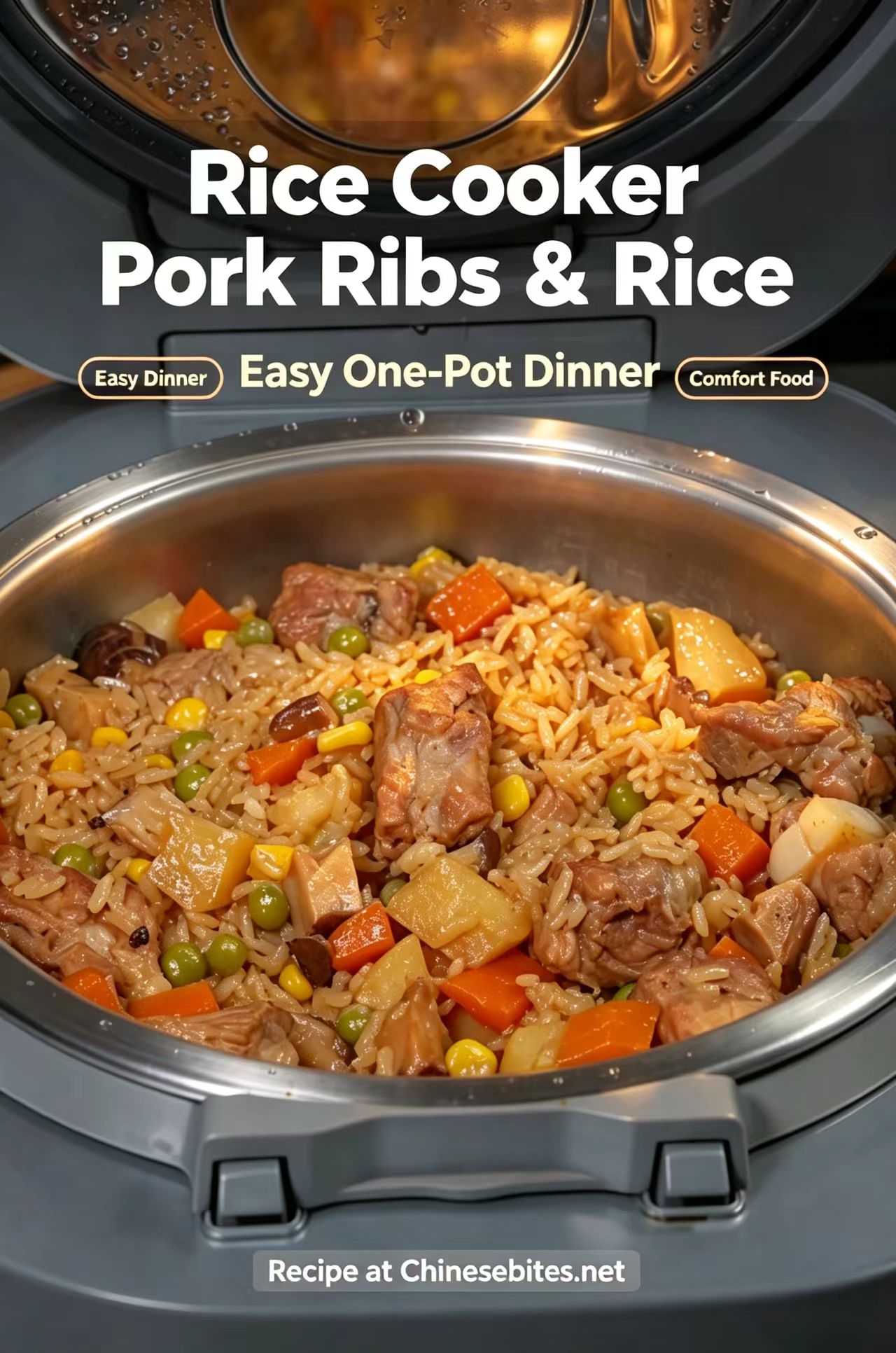
Rice Cooker Pork Ribs and Rice
Ingredients
Method
- Rinse the rice 2–3 times until the water runs mostly clear. Drain well and set aside.
- Put the pork ribs in a pot and cover with cold water — it must be cold water. Add a little salt, bring to a boil, and skim off the blood foam. Drain the ribs, then rinse off the remaining foam with hot water — it must be hot water. Drain well and set aside.
- Heat 1 tablespoon neutral oil in a large skillet over medium-high heat. Add the blanched, drained ribs and cook slowly, turning occasionally, until golden brown on both sides.
- Add the diced carrots, potatoes, and shiitake mushrooms. Stir-fry until the vegetables are just tender and no longer taste raw, about 3–4 minutes. They should still hold their shape — do not cook them until mushy.
- Add 1 tablespoon light soy sauce, 1 teaspoon dark soy sauce, 1 tablespoon oyster sauce, 1 teaspoon salt, and 1 teaspoon chicken bouillon powder. Stir well until the ribs and vegetables are evenly coated. Turn off the heat.
- Add the washed rice to the rice cooker pot. Pour in the stir-fried ribs and vegetables, including all the sauce from the skillet. Add the frozen corn and peas. Stir everything together evenly.
- Add water to the usual rice-cooker line for 2 cups of rice, using the same amount you normally use for plain rice.

- Close the lid and press the “Cook” or “White Rice” button.
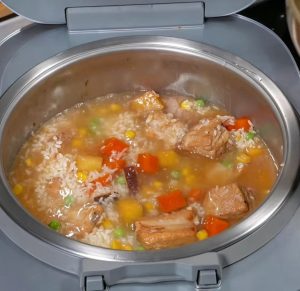
- When the rice cooker finishes, let it rest for 5–10 minutes before opening the lid. Fluff the rice and mix everything from the bottom up. Serve hot.
Notes
- Blanching rules: The ribs must start in cold water, not hot water. Add a little salt, bring to a boil, and skim off the blood foam. After draining, rinse the foam off with hot water — it must be hot water, not cold, so the meat does not tighten.
- Water amount: Use the same rice-cooker water line you normally use for 2 cups of rice. The ribs and vegetables release some liquid, so do not add extra water for them. If the finished rice is too wet, reduce the water by 2 tablespoons next time.
- Cut the ribs small: Small 1-inch pieces cook through in the same time as the rice. Large pieces may still be tough when the rice is done.
- Sear the ribs until golden: Drain the blanched ribs well before searing. This step builds the main flavor of the dish. Do not rush it.
- “Cook until just tender” means: the vegetables should lose their raw taste and soften slightly at the edges, but still keep their shape. Do not cook them until mushy — they will finish cooking in the rice cooker.
- Mushroom substitution: Cremini or button mushrooms work well if fresh shiitake mushrooms are not available.
- Dark soy sauce substitution: Use light soy sauce plus a tiny pinch of brown sugar or molasses for color.
- Oyster sauce substitution: Hoisin sauce or mushroom-based vegetarian oyster sauce works. Hoisin is sweeter, so adjust the salt slightly.
- Chicken bouillon powder: Can be omitted; add a little extra salt or soy sauce to taste.
- No rice cooker: Use a Dutch oven or heavy pot. Blanch and sear the ribs and vegetables, add the rice and water, bring to a boil, then cover and cook on the lowest heat for 20–25 minutes. Rest for 10 minutes before opening.
This is an easy rice cooker pork ribs and rice recipe for busy days. It is simple, and it gives you meat, vegetables, and rice in one pot — perfect when you do not want to cook several dishes but still want a complete meal.
The method is straightforward. Blanch the pork ribs in cold water with a little salt, bring to a boil, and skim off the blood foam. Drain the ribs and rinse off the foam with hot water. Then sear the ribs until golden on both sides, add diced carrots, potatoes, and mushrooms, and stir-fry until the vegetables are just tender and no longer taste raw. Season with light soy sauce, a little dark soy sauce, oyster sauce, salt, and chicken bouillon. Put washed rice into the rice cooker, add the ribs and vegetables with all the sauce, add corn and peas, stir everything together, add the same amount of water you normally use for rice, and press the cook button. When the timer goes off, the kitchen smells amazing.
Why This Rice Cooker Pork Ribs and Rice Works
It is a complete one-pot meal. Pork ribs, vegetables, and rice cook together in the rice cooker, so there is no separate side dish to make.
If you want to add a classic side dish to complete the meal, this classic Chinese tomato and egg stir-fry is the perfect partner. It is quick, colorful, and loved by kids and adults alike.
Blanching and searing give the ribs cleaner, deeper flavor. Starting the ribs in cold water pulls out blood and impurities. Rinsing with hot water keeps the meat from tightening up. Searing until golden builds the savory flavor that the rice absorbs.
The vegetables add color and balance. Carrots, potatoes, mushrooms, corn, and peas make the dish look inviting and taste more balanced. The sweetness of the corn and peas balances the savory ribs.
The rice cooker does the rest. After blanching and a quick stir-fry, you press one button and walk away. It is a true lazy rice cooker recipe.
Ingredients You’ll Need
- 1 lb (450 g) pork ribs, cut into small 1-inch pieces
- 2 cups (400 g) jasmine rice, rinsed and drained
- 1 tablespoon neutral oil
- ½ cup diced carrots
- ½ cup diced potatoes
- ½ cup diced fresh shiitake mushrooms (or cremini mushrooms)
- ⅓ cup frozen corn kernels
- ⅓ cup frozen peas
- 1 tablespoon light soy sauce
- 1 teaspoon dark soy sauce
- 1 tablespoon oyster sauce
- Salt, as needed for blanching; 1 teaspoon for seasoning
- 1 teaspoon chicken bouillon powder
- Water, to the usual rice-cooker line for 2 cups of rice (about 2 cups / 480 ml)
🥫 Shortcut: This recipe uses light soy sauce, dark soy sauce, and oyster sauce. If you don’t want to hunt for three separate bottles, a ready-made Asian stir-fry sauce set can save you a trip to a specialty store.
Step-by-Step Instructions
Step 1: Wash the Rice/、
Rinse the rice 2–3 times until the water runs mostly clear. Drain well and set aside. You do not need to soak the rice for this lazy version.
Step 2: Blanch the Pork Ribs
Put the pork ribs in a pot and cover with cold water — it must be cold water. Add a little salt, bring to a boil, and skim off the blood foam. Drain the ribs, then rinse off the remaining foam with hot water — it must be hot water. Drain well and set aside.
Step 3: Sear the Pork Ribs Until Golden
Heat 1 tablespoon of neutral oil in a large skillet over medium-high heat. Add the blanched, drained ribs and cook slowly, turning occasionally, until they are golden brown on both sides. Take your time here — the golden color is where the flavor comes from.
💡 Tool Tip: A carbon steel wok is excellent for getting that high heat and perfect golden crust on the ribs.
Step 4: Add the Vegetables
Add the diced carrots, potatoes, and shiitake mushrooms to the skillet. Stir-fry with the ribs until the vegetables are just tender and no longer taste raw, about 3–4 minutes. They should still hold their shape — do not cook them until mushy.
Step 5: Season Everything
Add 1 tablespoon light soy sauce, 1 teaspoon dark soy sauce, 1 tablespoon oyster sauce, 1 teaspoon salt, and 1 teaspoon chicken bouillon powder. Stir well until the ribs and vegetables are evenly coated. Turn off the heat.
Step 6: Assemble in the Rice Cooker
Add the washed rice to the rice cooker pot. Pour in the stir-fried ribs and vegetables, including all the sauce in the skillet. Add the frozen corn and peas. Stir everything together evenly.
Step 7: Add Water and Cook
Add water to the usual rice-cooker line for 2 cups of rice — the same amount you normally use when cooking plain rice. Close the lid and press the standard “Cook” or “White Rice” button.
💡 Tool Tip: A flat-bottom carbon steel wok is excellent for getting the high heat needed to sear the ribs to a golden crust. Unlike non-stick pans, it can handle high temperatures and works perfectly on gas, electric, and induction stoves.
When the rice cooker finishes, let it rest for 5–10 minutes before opening the lid. Fluff the rice and mix everything from the bottom up. Serve hot.
Shopping List (US Supermarket Friendly)
- Meat: 1 lb pork ribs, cut into small 1-inch pieces. Ask the butcher to cut them small — this helps them cook through with the rice.
- Produce: Carrots, potatoes, fresh shiitake or cremini mushrooms.
- Frozen: Corn kernels and peas. Frozen vegetables work perfectly here and save prep time.
- Pantry: Jasmine rice, neutral oil, light soy sauce, dark soy sauce, oyster sauce, salt, and chicken bouillon powder.
- Where to find Asian ingredients: Light soy sauce, dark soy sauce, and oyster sauce are available at most mainstream US supermarkets and Asian grocery stores such as H Mart, 99 Ranch, Weee!, or Amazon.
Ingredient Substitutions for Overseas Kitchens
- Fresh shiitake mushrooms → cremini or button mushrooms. Use the same amount. Cremini mushrooms are easy to find in US supermarkets and give a similar savory flavor.
- Dark soy sauce → light soy sauce plus a pinch of brown sugar or molasses. Dark soy sauce is mainly for color. Mix 1 teaspoon light soy sauce with a tiny pinch of brown sugar or molasses per teaspoon of dark soy sauce called for.
- Oyster sauce → hoisin sauce or mushroom-based vegetarian oyster sauce. Hoisin sauce is sweeter, so reduce the salt slightly if using it. Mushroom “oyster” sauce is a good vegetarian option.
- Chicken bouillon powder → chicken bouillon cube, crushed. Use about ⅓ of a cube, or simply omit it and add a little extra salt to taste.
- Pork ribs → baby back ribs or country-style ribs. Baby back ribs are ideal. If using boneless country-style ribs, cut them into small pieces and reduce the searing time slightly.
- Jasmine rice → medium-grain rice. Medium-grain rice such as Calrose works well. Use the same rice-cooker water line you normally use.
Tool Tips
- Rice cooker: A standard rice cooker works perfectly. Any rice cooker with a “Cook” or “White Rice” setting will work.
- Skillet: Use a large skillet or wok so the ribs have enough space to brown instead of steam.
- Cut the ribs small: Small 1-inch pieces cook at the same time as the rice. Large pieces may still be tough when the rice is done.
- Stir before cooking: Mix the rice, ribs, vegetables, corn, and peas together before pressing Cook so the flavor is evenly distributed.
Where Most People Get Stuck (and How to Fix It)
- “Should I rinse the ribs with cold water after blanching?” No. After blanching, rinse the foam off with hot water — it must be hot water. Cold water can tighten the meat. Also, the ribs must start in cold water for blanching, not hot water.
- “My rice came out too wet.” The ribs and vegetables release some liquid during cooking. Start with the usual rice-cooker water line for 2 cups of rice, but if your rice is consistently too wet, reduce the water by 2 tablespoons next time. Do not add extra water for the vegetables.
- “The ribs are still tough.” Cut the ribs into small 1-inch pieces, blanch them properly, and sear them until golden, not just until they change color. Small pieces are the key to tender ribs in a rice cooker.
- “The rice tastes bland.” Make sure you add the full seasoning mixture to the ribs and vegetables before they go into the rice cooker. The sauce needs to flavor the rice, so do not leave it in the skillet.
- “The bottom stuck to the pot.” Let the rice rest for 5–10 minutes after the cooker finishes, then fluff gently with a rice paddle. Avoid opening the lid repeatedly during cooking.
Frequently Asked Questions
Why must the ribs start in cold water for blanching?
Starting the ribs in cold water lets the water and meat heat up together slowly, so blood and impurities are drawn out more completely. If you drop the ribs into hot water, the surface tightens quickly and the impurities may stay trapped inside.
Why must I rinse the blanched ribs with hot water?
After blanching, the ribs are hot. Rinsing them with hot water washes off the foam without shocking the meat. Cold water can tighten the surface and make the ribs less tender.
What does “cook until just tender” mean?
It means the vegetables should lose their raw taste and start to soften at the edges, but still keep their shape. They should not be mushy. This step removes the raw flavor of the mushrooms and potatoes and helps the vegetables cook evenly with the rice in the rice cooker.
Can I use frozen carrots, potatoes, and mushrooms?
Frozen corn and peas work perfectly. For carrots, potatoes, and mushrooms, fresh is best because they hold their texture better during the rice-cooker cycle. If using frozen, do not thaw them first — just add them with the rice.
How much water should I add?
Add water to the same rice-cooker line you normally use for 2 cups of rice. The ribs and vegetables release some liquid, so do not add extra water for them. If your rice turns out too wet, reduce the water by 2 tablespoons the next time.
Can I make this recipe without a rice cooker?
Yes. Use a Dutch oven or heavy pot with a tight-fitting lid. Blanch and sear the ribs and vegetables in the pot, add the rice, corn, peas, and water, bring to a boil, then cover and cook on the lowest heat for 20–25 minutes. Let it rest for 10 minutes before opening.
Is this recipe spicy?
No. This is a savory, mild rice dish with no chili. If you want heat, add a teaspoon of chili crisp or a chopped dried red chili when you stir-fry the ribs.
How should I store leftovers?
Store leftovers in an airtight container in the refrigerator for up to 3 days. Reheat with a splash of water, covered, in the microwave or on the stovetop over low heat.
This rice cooker pork ribs and rice recipe is a practical way to get meat, vegetables, and rice on the table without a pile of dishes. One pot, a few simple ingredients, and one button are enough. If you are not sure what to make, give this lazy rice cooker recipe a try — it is easy and satisfying.
What to Serve with It
If you want to add a classic side dish to complete the meal, this classic Chinese tomato and egg stir-fry is the perfect partner. It is quick, colorful, and loved by kids and adults alike.
As an Amazon Associate I earn from qualifying purchases.