As an Amazon Associate I earn from qualifying purchases.
Soft, hollow buns stuffed with juicy braised pork — made easy at home.
Prep time: 30 minutes
Cook time: 1.5–2 hours
Rest time: 40 minutes
Makes: 12 buns
🛒 Easy Roujiamo Shopping List
Here’s everything you need to make authentic Roujiamo at home. Don’t forget to check the ingredient substitutions below if you can’t find certain items!
Meat & Produce
- 2.2 lb / 1 kg skin-on pork belly (or regular pork belly)
- 1.1 lb / 500 g pork shoulder (for extra juiciness)
- 1 large knob ginger
- 2-3 stalks scallions (plus more for serving)
Pantry & Spices
- Rock sugar (or regular granulated sugar)
- Light soy sauce and Dark soy sauce
- Shaoxing wine (or dry sherry)
- Neutral oil (vegetable, canola, or avocado oil)
- Spice Pack: Star anise, cinnamon stick, bay leaves, Sichuan peppercorns, fennel seeds, and dried tangerine peel (optional but recommended).
For the Buns (Baiji Mo)
- 3 cups / 400 g all-purpose flour
- 1 ¼ tsp / 4 g instant yeast
- 1 tbsp / 12 g sugar
- 1 cup / 240 ml warm water
- 1 tbsp neutral oil (plus extra for cooking)
Why This Recipe Works
Roujiamo is a Chinese street food classic from Shaanxi.
The bun is soft and hollow. The pork is rich and tender. And you can stuff it as full as you want.
The best part? The dough only needs a short rest — no long proofing.
“For the ultimate Shaanxi feast, serve this meat sandwich with my Easy Liangpi Recipe and a bowl of spicy Biang Biang Noodles.”
Ingredients
For the Braised Pork
- 2.2 lb / 1 kg skin-on pork belly, cut into large chunks
- Scallions and ginger, a few pieces each
- Shaoxing wine, a splash (substitute: dry sherry)
- Neutral oil, for cooking
- Rock sugar, a few pieces (substitute: 2 tbsp regular sugar)
- 1 tbsp dark soy sauce
- 2 tbsp light soy sauce
- Boiling water, enough to cover the pork
- 2 bay leaves
- 1 cinnamon stick
- 1 piece bai zhi (Angelica dahurica root) — optional, skip if you can’t find it
- Salt, to taste
For the Dough
- 3 cups / 400 g all-purpose flour
- 1 ¼ tsp / 4 g instant yeast
- 1 tbsp / 12 g sugar
- 1 cup / 240 ml warm water
For Assembly
- 2–3 scallions, finely chopped (optional)
Step 1: Blanch the Pork
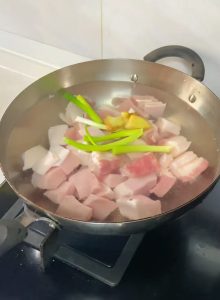
Cut the pork belly into large chunks.
Put them in a pot with cold water, scallions, ginger, and a splash of Shaoxing wine.
Bring to a boil. Skim off the foam. Cook for 3 minutes.
Take the pork out and rinse it with warm water.
Do not use cold water here. Cold water tightens the meat.
Set aside.

Step 2: Build the Color
Heat a wok or deep pan. Add a little oil.
Add a few pieces of rock sugar. Cook over low heat for about 2 minutes, until the sugar melts and turns amber.
Add the pork. Toss to coat it in the caramel color.
Add 1 tbsp dark soy sauce and 2 tbsp light soy sauce. Keep stirring.
You’ll see the pork turn a beautiful deep red-brown. The smell is amazing.
Pour in boiling water until the pork is just covered.
Add bay leaves, cinnamon stick, and bai zhi if using.
Step 3: Braise the Pork
Bring to a boil, then turn down to low heat.
Simmer for 1.5 to 2 hours, until the pork is tender and a chopstick goes through easily.
Add salt to taste near the end.
The meat should be soft but not falling apart. If it’s still tough, keep simmering.
Step 4: Make the Dough
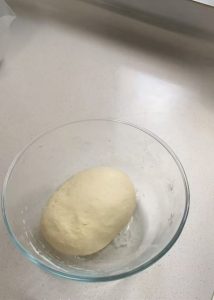
In a bowl, mix 400 g flour, 4 g yeast, 1 tbsp sugar, and 240 g warm water.
Stir until it forms a shaggy mass. Then knead with your hands until smooth.
Cover and rest for 10 minutes. You don’t need to let it fully rise.
Step 5: Shape the Buns
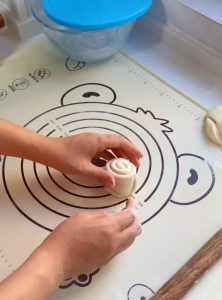
Roll the dough into a long log. Cut it into about 12 equal pieces.
Roll each piece into a ball.
Then roll each ball into a small log, and flatten it into an ox-tongue shape.
Fold it in half lengthwise. Roll it up from one end, like a cinnamon roll.
Tuck the end underneath to seal it. Press it flat with your palm.
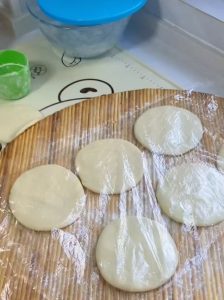
Roll it out again into a slightly thick round disc.
Repeat with the rest of the dough.
Step 6: Rest the Buns
Cover all the shaped buns with plastic wrap.
Let them rest for 30 minutes.
This is a short rest, not a full rise. The buns will puff slightly.
Step 7: Cook the Buns
Heat an electric griddle or a non-stick pan over medium heat.
Do not add any oil.
Place the buns in the pan. Cover with a lid.
Cook until both sides are golden brown and slightly puffed.
They cook fast. Flip once, and press gently with a spatula. If the bun springs back, it’s done.
No electric griddle? A regular non-stick skillet with a lid works perfectly.
Step 8: Chop the Pork and Assemble
Let the braised pork cool slightly.
Chop it finely on a cutting board. Mix in a little chopped scallion if you like.
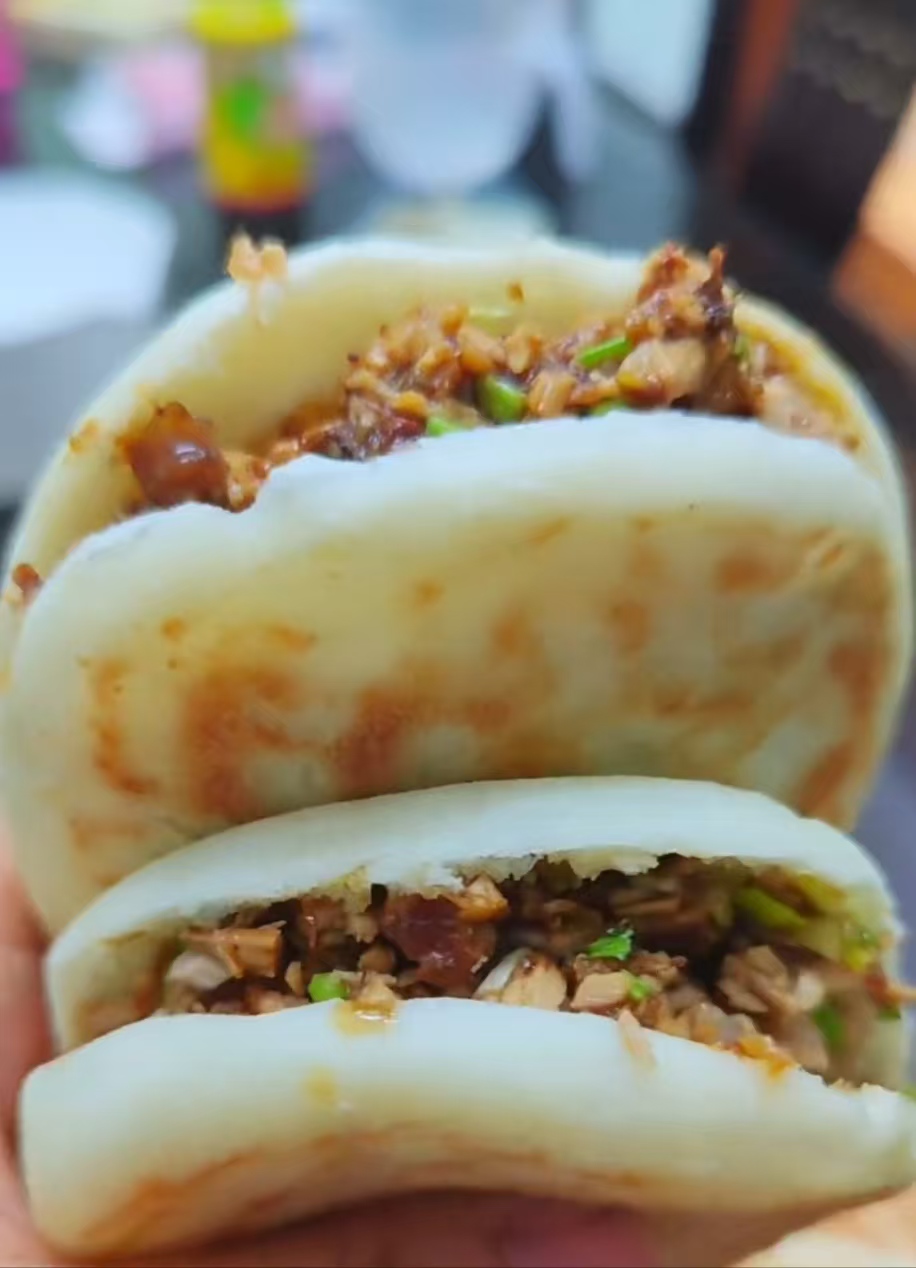
Slice each bun open from the side, but don’t cut all the way through.
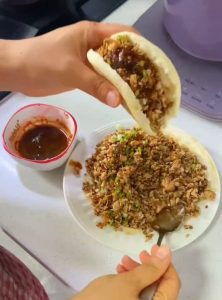
Stuff it generously with the chopped pork.
The meat should spill out. That’s the Shaanxi way.
Take a big bite. It’s ridiculously good.
🛠️ A Note on Equipment & Ingredients (For Overseas Cooks)
Don’t let a missing tool or ingredient stop you from making authentic Roujiamo. Here are a few practical swaps and tricks for your Western kitchen:
Ingredient Substitutions
- Skin-on Pork Belly: If you can’t find skin-on, regular pork belly works perfectly. If it’s too lean, add 2 tablespoons of neutral oil to the braising liquid. (Tip: Ask your butcher for “pork belly with the rind on” — they often have it behind the counter.)
- Shaoxing Wine: Substitute with dry sherry or a dry white wine (like Sauvignon Blanc). Do not use cooking wine, as it’s too salty.
- Rock Sugar: Regular granulated sugar or light brown sugar works perfectly. The caramel color will be slightly less glossy but tastes the same.
- Dark Soy Sauce: If you only have light soy sauce, add a pinch of molasses or dark brown sugar to mimic the color and thickness.
- Spices (Bai Zhi, Cao Guo, Chenpi): These are hard to find outside of Asia. Skip them if you must. Or substitute: 1 piece of dried orange peel for chenpi, and a small pinch of fennel seeds for cao guo.
- Bai Ji Mo (The Bun): If you can’t find all-purpose flour, bread flour works but will be chewier. Use half bread flour and half cake flour for the softest buns.
Equipment Tips
- Electric Griddle vs. Cast Iron Skillet: A cast iron skillet is a perfect substitute for an electric griddle. Just use medium heat. You don’t need any oil to toast the buns — a dry pan is the secret to the crispy “tiger back” spots.
- Dutch Oven (For Braising): A heavy Dutch oven is ideal for the pork. It retains heat beautifully, so you can use the lowest possible heat for the 2-hour braise. If you don’t have one, a regular heavy pot with a tight-fitting lid works.
- Chopping the Meat: A sharp cleaver or chef’s knife is essential. Chop while the meat is still warm (but not boiling hot), and add a spoonful of the braising liquid to keep it juicy.
🛠️ Highly Recommended Tools
-
Dutch Oven: A heavy Dutch oven (paid link) is ideal for the 2-hour braise. It retains heat beautifully and keeps the pork juicy.
What Might Trip You Up (Common Sticking Points)
- It’s NOT a hamburger. Don’t be tempted to add lettuce, cheese, or ketchup. The traditional way is just meat, fat, and bread. A few locals add chopped green chilies, but that’s it.
- Don’t skip the “Half-Rise” for the buns. If you let the dough double in size, you’ll get a fluffy bao bun instead of a hollow Roujiamo bun. You want it to puff only *slightly*.
- The meat should be chopped, not shredded. If you use a food processor, you’ll end up with mush. Use a knife to chop it into small, juicy chunks.
- Control your heat when making the caramel. Sugar goes from “perfect amber” to “burnt and bitter” in about 5 seconds. Have your boiling water ready to pour in *before* you start.
- Salt at the end. Soy sauce is salty and it reduces during the long braise. Always taste the meat before adding extra salt.
FAQ
Can I use regular sugar instead of rock sugar?
Yes. Use about 2 tablespoons of regular sugar.
What if I can’t find bai zhi?
Skip it. The pork will still be delicious. You can also add a small piece of dried orange peel.
Can I make the pork ahead?
Absolutely. Braise it a day ahead and refrigerate. The flavor gets even better.
Can I freeze the buns?
Yes. Let them cool completely, then freeze. Reheat in a hot oven or skillet.
Do I need an electric griddle?
No. A regular non-stick pan with a lid works just fine.
Final Thoughts
Roujiamo is not fancy food. It’s torn, chopped, and stuffed until it overflows.
The bun is soft and slightly chewy. The pork is rich and savory. And when you bite in, the juices soak into the bread.
This is street food from Xi’an — and now you can make it in your own kitchen.
Did you make this? Tag me on Instagram so I can see it!
New here? Subscribe for more Chinese street food recipes made easy at home.
Ingredients
Equipment
Method
As an Amazon Associate I earn from qualifying purchases.

Pingback: Easy Liangpi Recipe: Chinese Cold Skin Noodles (No-Wash Lazy Version) – Chinese Street Food Recipes